
A Beginner’s Guide to Creating a Consistent Hair Care Routine
Starting a hair care routine doesn’t need to be complicated. With a few clear steps—tailored to your hair type and lifestyle—you can build a reliable routine that improves texture, reduces breakage, and saves time.
This guide walks you through practical choices for cleansing, protection, nutrition, tools, and troubleshooting so you can maintain healthier hair consistently.
1. Know your hair type and set realistic goals
Before buying products, identify your hair type (straight, wavy, curly, coily), porosity (how quickly it absorbs water), density (thick or thin), and common concerns (dryness, frizz, thinning). Your goals might be daily moisture, fewer tangles, or stronger strands. Clear goals make it easier to pick products, treatments, and a realistic schedule.
2. Build a simple weekly plan
Decide how often to wash, treat, and style. A basic, beginner-friendly plan:
- Every 2–4 days: shampoo and condition, adjusted for oiliness and activity level.
- Once a week: deeper conditioning or a hair mask for hydration.
- As needed: heat styling, protective styles, or trims for split ends.
Write the plan down and place it where you’ll see it—consistency comes from simple repetition, not complicated rules.
3. Choose the right cleanser and conditioner
Select a gentle shampoo and a matching conditioner designed for your main concern—hydration for dry hair, lightweight formulas for fine hair, or color-safe options for treated hair. For dry or damaged hair, a hydrating set with hyaluronic or similar humectants can improve moisture balance; consider options like Elvive Hyaluron Plump shampoo & conditioner as an example of a hydration-focused set.
Technique matters: concentrate shampoo on the scalp, rinse thoroughly, and apply conditioner from mid-lengths to ends. Use cooler water for the final rinse to help smooth the cuticle.
4. Protect and style wisely
Limit heat to 1–2 times per week and always use a heat protectant. When you sleep, switch to lower-friction options—satin or silk reduces breakage and frizz. A small change like tying hair loosely or using a silk accessory helps preserve styles and keeps ends healthier; a useful option is a mulberry silk scarf for night protection or loose wraps.
When styling, choose low-manipulation looks (braids, buns, soft twists) on days you want to reduce brushing and heat exposure.
5. Supplements that support hair
Topical care is essential, but internal support can help too—especially if diet lacks key nutrients. Collagen peptides are popular for supporting hair strength and elasticity; you can explore options through collagen supplements.
Essential fatty acids help scalp health and shine. A concentrated product like omega‑3 fish oil can reduce scalp inflammation and support follicle integrity when used consistently.
6. Vitamins, protein and gut health
If your diet is inconsistent, a broad-spectrum multivitamin helps cover gaps—consider daily multivitamin supplements that include biotin, B vitamins, iron-friendly nutrients, and zinc. Vitamin D also plays a role in the hair cycle; if you spend limited time outdoors, look into vitamin D supplements after assessing levels with a provider.
Hair is mostly protein—if you have low dietary protein, a quality protein powder supplement can help you meet daily needs to support keratin production. Also consider gut support—balanced digestion improves nutrient absorption; probiotic supplements may assist those with digestive issues, but prioritize whole-food changes first.
7. Tools, timing and troubleshooting
Keep tools clean (brushes, combs, heat tools). Detangle from ends up to minimize breakage and use a wide-tooth comb on wet hair. Schedule trims every 8–12 weeks to remove split ends and maintain shape.
If you notice increased shedding or sudden texture changes, re-evaluate recent product additions, stress, dietary shifts, or medication changes. Minor seasonal shedding is normal; rapid or patchy loss merits professional evaluation.
Quick checklist
- Identify hair type and main goals.
- Create a wash/treatment schedule and stick to it for 6–8 weeks.
- Use a hydrating shampoo & conditioner that matches your needs.
- Protect hair at night with silk or low-friction options.
- Limit heat; always use a protectant.
- Support diet with targeted supplements if needed (protein, collagen, omegas, vitamins).
- Trim regularly and address persistent shedding with a professional.
Conclusion
Consistency beats complexity: pick a simple, repeatable routine that addresses your main concern, combine thoughtful protection and occasional treatments, and support results with sensible nutrition. Track one change at a time for 6–8 weeks to judge its effect.
FAQ
How often should I wash my hair?
Wash frequency depends on scalp oiliness and activity—every 2–4 days works for most. Adjust up for very oily scalps or after heavy sweating.
Will supplements fix thinning hair quickly?
Supplements can help if a nutrient deficiency is present, but hair grows slowly; expect to wait several months to see visible improvements.
Can I use a leave-in and oil together?
Yes—apply a lightweight leave-in for moisture, then seal ends with a small amount of oil to lock hydration and reduce frizz.
Is sleeping on silk really worth it?
Silk reduces friction and helps prevent breakage and frizz, especially for fragile, curly, or chemically treated hair.
How do I know if a product is too heavy?
If your hair feels flat, limp, or greasy shortly after use, the product may be too rich—switch to lighter formulas or use less product.
Products Featured in This Article

Triple Strength Omega 3 Fish Oil 36…
Product description Omega Essential Fatty Acids Add to Cart Add to Cart Add to Cart Add…

PoeticEHome 100% Mulberry Silk Neck…
Product description Care & Styling Card Included More Sizes | Visit Our Store 1 Endless Styles…
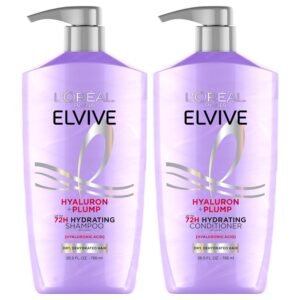
L’Oreal Paris Elvive Hyaluron…
Dry, dehydrated hair needs more than basic cleansing. The L’Oreal Paris Elvive Hyaluron Plump Shampoo and…